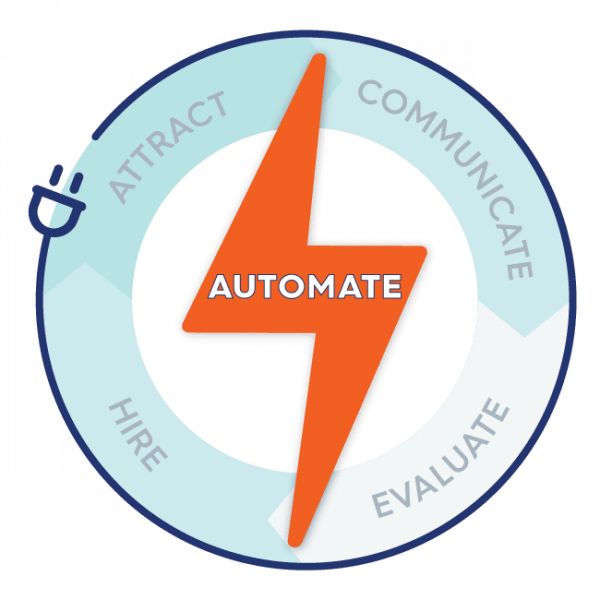
Make better hiring decisions with easy-to-use evaluation tools
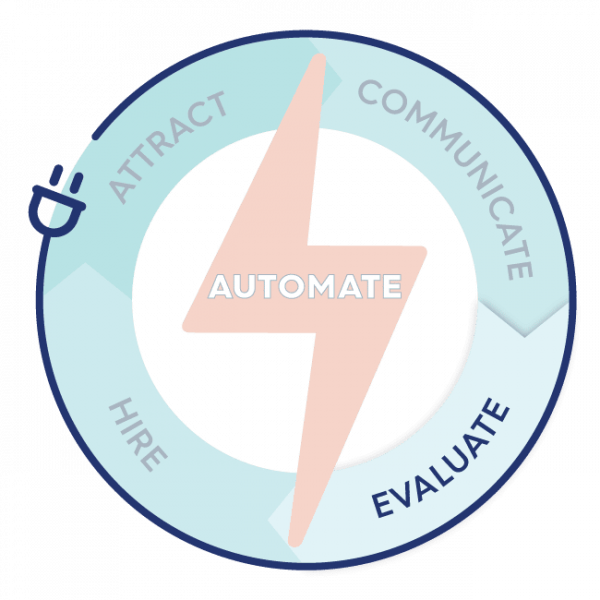
Our assessments let you evaluate candidates beyond the resume and measure their abilities consistently across the board. Use CareerPlug’s built-in assessment library or leverage our partnerships with leading assessment technology provides like Outmatch, Traitify and Predictive Index.
Make quality hires consistently with our interview scorecards. Evaluate candidates using measurable, objective criteria that you specify for each role (or use our built-in scorecard templates!). By standardizing your evaluation methods, you can accurately compare strengths and weaknesses for candidates so you end up with the right hires every time.
Make quality hires consistently with our interview scorecards. Evaluate candidates using measurable, objective criteria that you specify for each role (or use our built-in scorecard templates!). By standardizing your evaluation methods, you can accurately compare strengths and weakness for candidates so you end up with the right hires every time.
Candidate assessment is structured evaluation before and during the interview — role-specific assessments built into the application, interview scorecards used during and after interviews, and pre-hire tasks that surface how a candidate actually performs vs. how they describe themselves on a resume. Assessment is about building confidence in the hire before you make an offer — a clearer, evidence-backed view of the strongest candidates. It sits after screening, before the offer, and runs alongside interviewing.
The two tools do different jobs. Pre-screen questions gate the application — license proof, schedule availability, work authorization — yes/no answers that filter out non-starters. Assessments take it further. A 10-to-15-minute exercise surfaces how a candidate thinks, communicates, or performs on task-like scenarios — signal you don't get from a resume or a 30-minute interview. You use them in order: filter first, then evaluate, then interview.

Yes, and this is where they earn their keep. Senior salaried hires have resumes, references, and interview track records — you already have a lot of signal to work with. Hourly and frontline candidates have much thinner signals: resumes are sparse, references are spotty, and interview performance often doesn't predict day-to-day work. A short assessment can tell you in 10 minutes what three interviews won't.
Structured scorecards force every interviewer to evaluate on the same criteria using the same scale. Without them, gut feel quietly selects for candidates who remind the interviewer of themselves — which is the source of a lot of hiring bias. Scorecards don't eliminate bias (no tool does), but they make decision criteria visible and discussable, which is the first step toward reducing it. Brands hiring across dozens of managers see the biggest effect here — decision consistency across the hiring team is where bias reduction shows up in the numbers.
Multi-location operators and franchise systems where hiring consistency across managers matters. A single-location owner can do structured evaluation in their head if they're disciplined. A 50-location brand can't — and the inconsistency compounds until every location has its own hiring standard. Assessments and scorecards are the way consistency scales when you can't personally sit in every interview.